Commercial Roofers in Downtown Lancaster
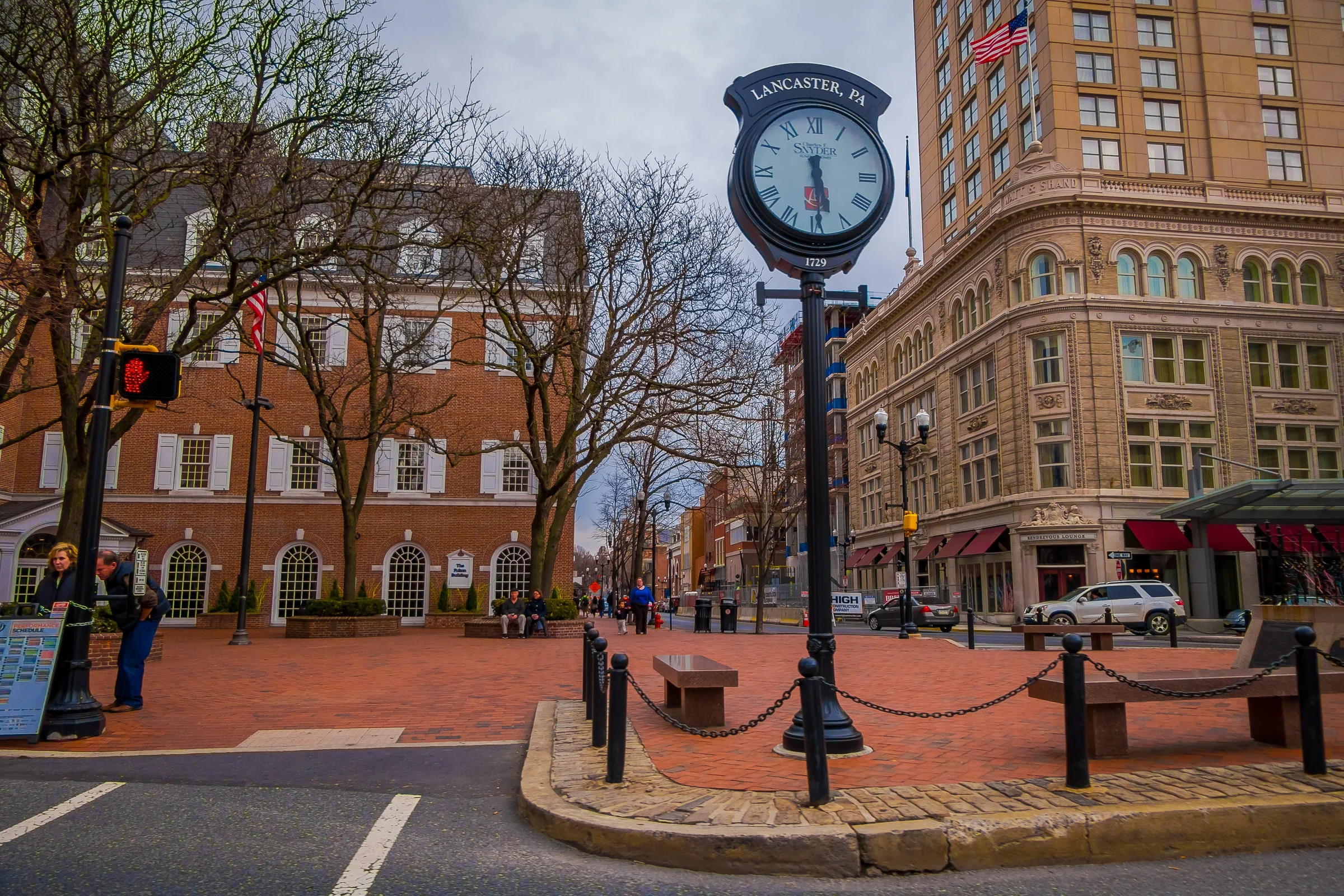
Commercial roofing in Downtown Lancaster should begin with a documented assessment of membrane condition, seams, flashings, drainage, penetrations, and moisture before repair, coating, or replacement is selected. Downtown Lancaster is built dense around Penn Square, Central Market, and the convention center and hotel complex that anchor the district, and that density changes how roof work gets planned. Access, staging, and historic district rules all factor into a downtown project in ways they don't in a suburban or rural part of the county.
Central Market and Lancaster's Historic Market House Roof
Central Market operates out of a historic masonry market house, and any roof work on a building like that has to respect both its structural age and its status as a working, occupied market during business hours. Historic masonry roof structures often mix original slate or clay tile sections with later membrane repairs added over decades, and matching new work to what's already there - or replacing a section entirely with appropriate materials - takes more planning than a standard commercial reroof.
We coordinate closely with building management and any historic preservation requirements before scoping work on a building this significant to the downtown.
Convention Center and Hotel Roofs Downtown
The Lancaster County Convention Center and its attached hotel run large membrane roofs over exhibit hall and meeting space, with a hospitality operation running underneath that can't tolerate a leak during a booked event. Drainage on a roof this size, and the coordination needed to keep noise and access disruption away from guest floors and event spaces, both take more planning than a typical commercial building.
We schedule inspection and repair work around the venue's event calendar specifically, since a convention center rarely has an obvious slow season the way some businesses do.
Penn Square Office Buildings and Mid-Rise Roofs
The office buildings around Penn Square run from a few stories to mid-rise, most with flat membrane roofs carrying HVAC equipment, communications infrastructure, and sometimes a rooftop terrace or mechanical penthouse. Property managers here typically answer to ownership groups or institutional investors who expect a formal bid package - product submittals, warranty terms, and a documented scope - before approving any roof work.
We provide that documentation as standard practice on downtown office work, along with coordination through building management for elevator or freight access rather than assuming a simple ground-level entry.
Urban Access: Getting Crews and Material to a Downtown Roof
A downtown building rarely has the open site access a suburban property does. Material and equipment usually have to move through a loading dock, a freight elevator, or a narrow alley, and street closures or permits may be needed for a crane or lift.
- Coordinating freight elevator or loading dock scheduling with building management
- Securing city permits for any street or sidewalk closure needed for equipment
- Planning material staging in limited on-site or curbside space
- Protecting adjacent building facades and pedestrian areas during work
- Scheduling noisy operations around business and hotel guest hours
Historic District Considerations for Roof Work
Much of downtown Lancaster falls within a designated historic district, and roof work visible from the street - material choice, color, and sometimes even flashing profile - can be subject to review before work begins. That review process adds time to a project schedule that a suburban building owner wouldn't need to plan for.
We flag historic district requirements early in the scoping process so a building owner isn't surprised by an approval timeline partway through planning a project.
Coordinating Roof Work With Multiple Downtown Stakeholders
A single downtown roof project can involve more parties than the building owner alone - a property management company, a ground-floor retail tenant, an adjacent building owner whose wall shares a party line, and in some cases the city if sidewalk or street access is needed. Getting all of that coordinated before work starts avoids delays once a crew and equipment are already scheduled.
We handle that coordination directly where the building owner wants us to, reaching out to neighboring property contacts about staging or protection needs and confirming permit requirements with the city ahead of the scheduled start date. That upfront work costs more planning time than a standalone suburban building, but it prevents the kind of mid-project delay that's far more expensive once a crew is already mobilized.
For office buildings managed by an outside firm, we're used to working through a property manager rather than the ownership group directly, and we structure our documentation and communication to fit whatever reporting a management company needs to pass along to ownership.
Downtown Lancaster Building Owners and Managers Ask
Does a historic district designation slow down a roof project?
It can add a review step before work begins, particularly for anything visible from the street. We flag that requirement early so it's built into the project timeline from the start.
How do you get material and equipment to a downtown roof?
Through whatever access the building has - a loading dock, freight elevator, or coordinated street access - planned in advance with building management and, where needed, city permits.
Can roof work happen at the convention center without disrupting events?
Yes, we schedule around the venue's event calendar and sequence noisy or disruptive work away from booked dates.
What documentation do office building managers typically need?
A formal bid package with product submittals, warranty terms, and a documented scope, which we provide as standard practice on downtown institutional work.
What roof systems are appropriate for a historic masonry building like Central Market?
It depends on what's original to the structure and what's already been repaired. We assess slate, tile, and any existing membrane sections separately and recommend materials appropriate to a historic building rather than a standard commercial default.
Roofing for the Route 23 Industrial and Ag-Business Strip in Leola
Explore this commercial roofing scope
Commercial Roof Systems for Lititz's Production Campuses and Legacy Buildings
Explore this commercial roofing scope
Roofing Contractors for Manheim Township's Office Parks and Retail Buildings
Explore this commercial roofing scope
Roof Contractors Built to Work Around Manheim's Auction Calendar
Explore this commercial roofing scope