
Sarnafil PVC for Roofs That See Grease, Oil, or Wash-Bay Chemicals
Sika Sarnafil's PVC line is the manufacturer we reach for most often when a roof's chemical exposure profile rules out a standard TPO submittal, whether that's a vehicle auction's wash-bay exhaust or an ag-equipment dealer's parts-cleaning operation. This page covers where their catalog fits and how their chemical-resistance data factors into the specification.
Sarnafil S327 and the Chemical-Resistance Conversation
Sika Sarnafil's PVC membrane line, including their long-standing S327 product family, carries published chemical-resistance data covering exposure to oils, fuels, and a range of industrial chemicals that goes well beyond what a standard TPO product's data sheet addresses. On buildings like Manheim Auto Auction's detailing and wash-bay facilities, that data sheet is the actual technical basis for recommending PVC over a lower-cost TPO alternative, not a general assumption about PVC's chemical resistance.
We pull the specific exposure our client's operation involves, cleaning solvents, detailing chemicals, fuel handling, whatever applies, and check it against Sarnafil's published compatibility data before finalizing the recommendation, since chemical resistance varies by specific compound and Sarnafil's own documentation is more reliable than a general industry assumption about PVC.
Reinforced Membrane for Rock Lititz's Production Campus
Rock Lititz's production and fabrication campus, where rooftop rigging points and equipment loads run heavier than a standard commercial building, is a candidate for Sarnafil's reinforced PVC options on sections of roof carrying frequent rigging or fabrication-related rooftop access. Sarnafil's reinforced membrane options add puncture and tear resistance beyond a standard sheet, which matters on roof areas that see more foot traffic and point loading than a typical low-traffic commercial field.
We identify those higher-traffic zones during the initial roof walk and price reinforced membrane specifically for those areas rather than upgrading the entire roof field when only a portion of it sees that level of use.
Ag-Equipment Dealer Roofs Along the Route 30/41 Corridor
The ag-equipment dealers and service buildings near the Route 30 and Route 41 junction outside Gap run rooftop exhaust from parts-cleaning and vehicle service operations that put a similar exposure profile on the roof as Manheim's wash bays, just at a smaller building scale. We price Sarnafil against a standard TPO alternate on these buildings specifically where the owner or facility manager can confirm which cleaning chemicals or solvents are actually used inside, since that detail changes whether the PVC premium is worth carrying.
Not every ag-dealer building on this corridor needs PVC. Where the primary rooftop exposure is dust and aggregate particulate rather than chemical vapor, standard TPO performs just as well at a lower material cost, and we say so rather than defaulting to the more expensive membrane across every building in the corridor.
Welding Chemistry and Long-Term Seam Performance
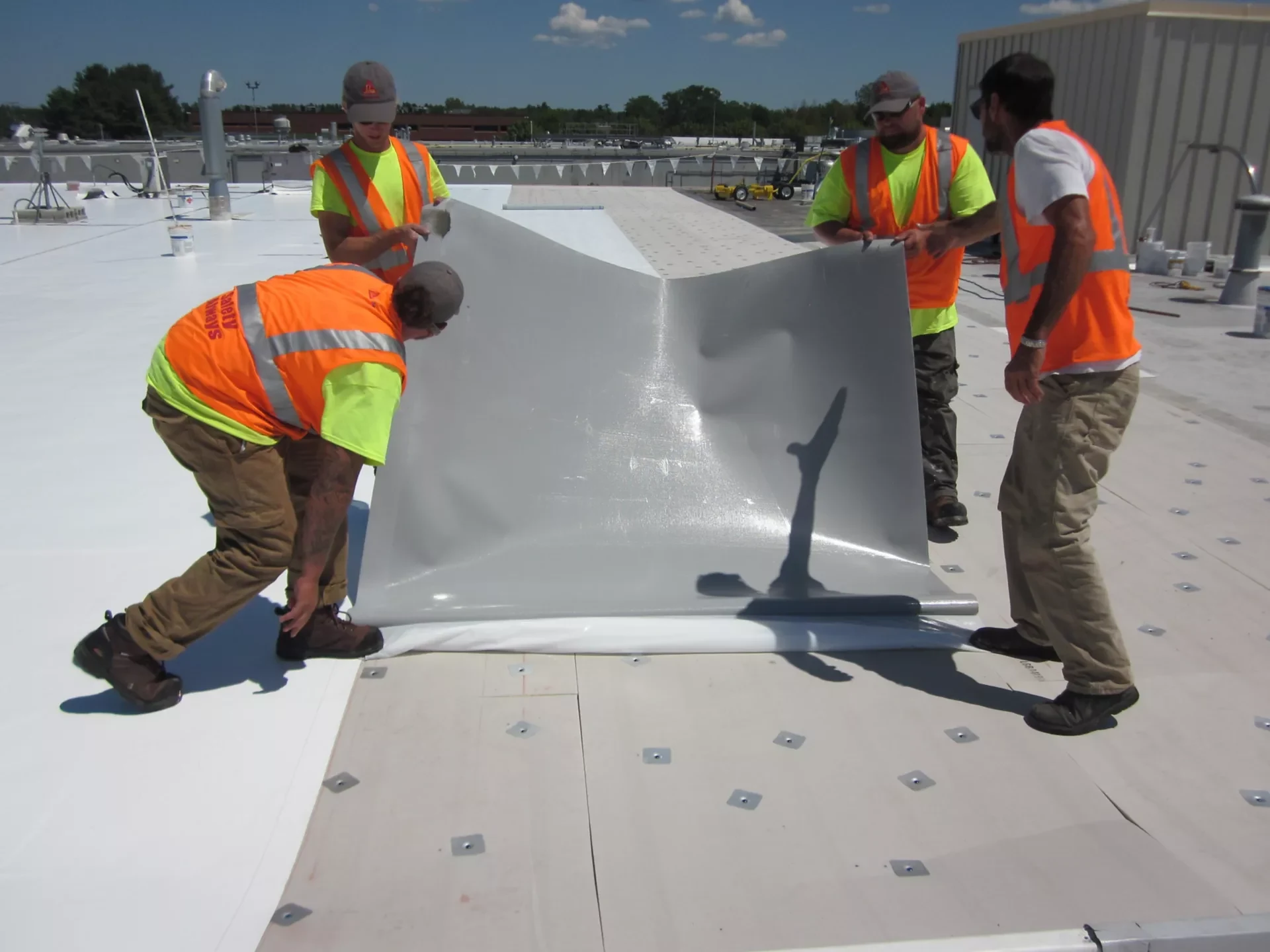
Sarnafil's PVC sheet heat-welds using a hot-air process similar in principle to TPO welding, though the plasticizer content in PVC changes how the welder settings and technique need to be handled compared to a polyolefin sheet. Our crews run the same test-weld and peel-test protocol on Sarnafil PVC that we run on any thermoplastic membrane, confirming weld strength before production welding begins on a given day's conditions.
Sarnafil has published long-term field performance data on their PVC formulations addressing the plasticizer-retention concerns that affected some older-generation PVC products industry-wide, and we reference their current technical documentation rather than relying on PVC's general reputation from decades-old installations.
That documentation matters most when a facility's insurer or corporate risk management team asks for evidence supporting a membrane choice tied to chemical exposure. Having Sarnafil's current technical data on file, rather than relying on our own field experience alone, gives an owner a manufacturer-backed record to point to if that question ever comes up during an insurance review or an ownership transition.
What we document in a Sarnafil PVC submittal for a chemical-exposure roof:
- Specific chemical or fuel exposure identified from the facility's actual operations
- Sarnafil's published chemical-resistance data cross-referenced to that exposure
- Reinforced membrane specification for any confirmed high-traffic or rigging zones
- Weld test and peel-test log for the completed installation
- Warranty terms specific to the chemical-exposure use case, where applicable
What We Don't Claim
We install Sarnafil systems per their published specification and reference their technical documentation when making a chemical-resistance recommendation. That's a factual description of our process, not a claim to a specific certification tier or exclusive dealer status with Sika, and we don't present it as one. An owner who wants our standing confirmed for a specific project should ask directly.
Questions on Sika Sarnafil Systems
Is Sarnafil PVC more expensive than standard TPO?
Generally yes, per square foot at comparable thickness. We recommend it specifically where a documented chemical or fuel exposure justifies the added cost.
Can Sarnafil confirm resistance to a specific chemical our facility uses?
We reference their published technical data for the compound in question and can request additional documentation from the manufacturer directly if a specific chemical isn't already addressed in their standard literature.
Does reinforced PVC cost significantly more than standard membrane?
There's a cost premium, which is why we price reinforced membrane only for the specific zones that see heavy traffic or point loading rather than the entire roof by default.
How does Sarnafil's warranty compare to Carlisle or GAF on a standard project?
Broadly comparable in structure, scaling with thickness and attachment method. We compare specific terms at bid time since published warranty matrices change periodically across all manufacturers.
Is older Sarnafil PVC on our building still under warranty?
It depends on the original installation date and warranty term selected. We can review existing documentation if available, or inspect the roof directly to assess current condition.
Johns Manville's Asphalt Heritage on Older Riverfront Buildings
Explore this commercial roofing scope
Versico Systems on Competitively Bid Distribution Roofs
Explore this commercial roofing scope
Carlisle SynTec: A Membrane Line With Its Home Plant an Hour From Our Jobs
Explore this commercial roofing scope
GAF Commercial Systems on School, Municipal, and Retail Roofs Here
Explore this commercial roofing scope