
Roofing for Distribution and Logistics Centers
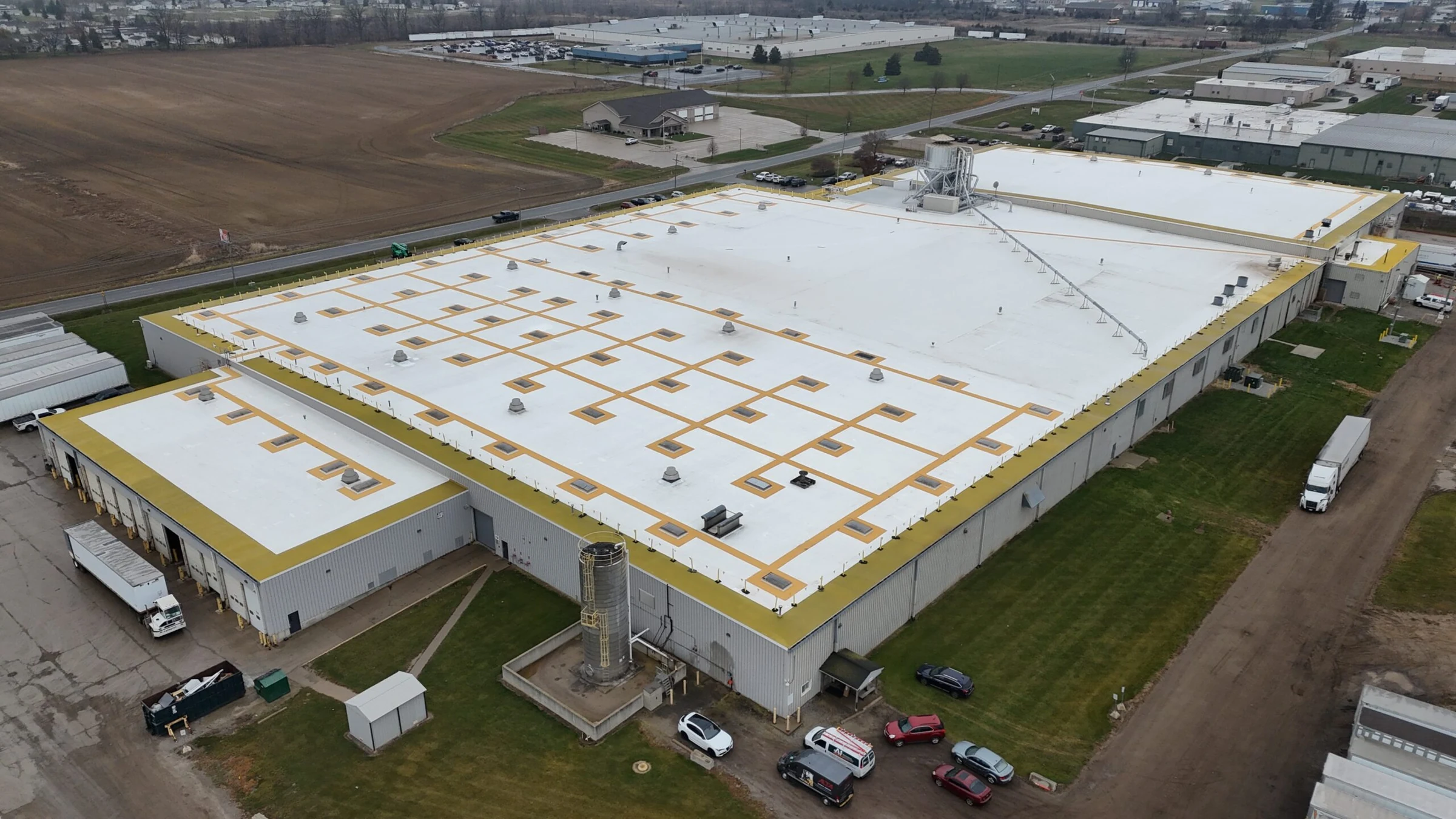
Distribution operations in Lancaster County cluster around rail access points like the line through Mount Joy and the turnpike interchanges that make the county attractive to third-party logistics tenants. These buildings differ from a straightforward bulk warehouse in one key way: tenant fit-out cycles and cross-dock layouts keep adding roof penetrations long after the shell is built, and the roof has to accommodate that churn without losing its warranty.
Roof Penetrations From Ongoing Tenant Fit-Out
A distribution center's tenant list can turn over every few years, and every new tenant improvement package tends to add rooftop equipment: additional HVAC tonnage, exhaust for battery-charging stations, conveyor drive penetrations, or dock leveler equipment housings. Each of those penetrations is a coordination point between the landlord's roof warranty and the tenant's contractor, and a lot of warranty voids we see on these buildings trace back to a tenant's electrician or HVAC sub cutting into the membrane without notifying the roofing contractor of record.
We work directly with property management and the tenant's TI general contractor to review any new rooftop penetration before it happens, not after, so the landlord's warranty stays intact and the new equipment is flashed to the same standard as the original roof.
Electric forklift fleets are becoming standard across the county's distribution operations, and the battery-charging infrastructure that comes with that shift often needs dedicated rooftop ventilation or exhaust that older buildings weren't designed to carry. We see this addition more often now than we did even a few years ago, and we treat it as its own category of penetration review rather than folding it into general tenant HVAC changes.
Cross-Dock Configurations and Structural Considerations
Cross-dock buildings carry dock doors and truck courts on two sides rather than one, which changes both the roof's structural loading near the perimeter and the staging logistics for a reroof. We plan crane placement and material drops around active truck courts on both sides of the building, since a cross-dock site rarely has a quiet side to stage from the way a single-loaded warehouse does.
Rail-served sites near the Mount Joy corridor add another variable: rail spur clearance and vibration from switching operations, which we account for in staging plans and in how we sequence work near the rail-adjacent wall.
Solar-Ready and Future-Load Roof Assemblies
A growing number of distribution landlords are pricing solar-ready roof assemblies into new construction and major reroofs, anticipating rooftop solar either for their own use or as a lease amenity. We detail those roofs with reinforced membrane at anticipated rack zones and document structural capacity for future panel loads, so the roof doesn't need to be reopened when a solar array gets added five years later.
Even on buildings without solar plans today, we flag roof assemblies that could support future rooftop load with minimal modification, since that's a detail landlords increasingly ask about at the capital planning stage.
Rooftop EV charging infrastructure for trailer yards and employee parking is following a similar path, with some landlords running conduit and structural provisions during a reroof even before a specific tenant commitment justifies the full build-out. We price that provisioning as an add-alternate on the bid, so ownership can decide independently of the core roof replacement scope.
- Current tenant rooftop equipment inventory and warranty status
- Anticipated TI penetrations for the next lease cycle
- Truck court and dock door layout on all loaded sides
- Rail spur proximity and vibration exposure where applicable
- Structural capacity for future solar or additional rooftop load
- Landlord versus tenant responsibility split on the lease
- Existing manufacturer warranty terms and transfer conditions
Landlord and Tenant Coordination on Bid Packages
Roof work on a leased distribution building usually involves at least two parties beyond the roofing contractor: the landlord's asset manager and the tenant's operations team, each with different priorities around downtime and cost allocation. We put together bid documentation that separates landlord-responsibility scope from tenant-driven additions, which makes the cost allocation conversation between those two parties much cleaner than a single undifferentiated proposal.
For institutional landlords, we format submittals to match whatever capital approval process their asset management platform requires, including inspection reports that feed directly into a reserve study.
Questions From Distribution Center Landlords and Operators
How do you keep tenant fit-out work from voiding our roof warranty?
We review any planned rooftop penetration with the tenant's contractor before it happens and flash new equipment to the same standard as the original installation, documented for the warranty file.
Can you work around active truck court traffic on both sides of a cross-dock building?
Yes, we plan staging and crane placement around whichever side has lower truck volume at a given time, and we adjust as the operation's schedule shifts during the project.
Should we build in solar-ready capacity now or wait?
If a reroof is happening anyway, reinforcing likely rack zones costs relatively little compared to reopening a finished roof later. We'll walk through the cost difference so you can decide based on your actual solar timeline.
How do you separate landlord and tenant costs on a shared roof project?
We scope and bid landlord-responsibility work separately from tenant-driven additions, so the cost allocation between the two parties is documented clearly from the start.
Do you account for rail spur vibration in staging near Mount Joy sites?
Yes, switching vibration and spur clearance factor into how we sequence work along the rail-adjacent side of any site near an active line.
Roofing for Hospitals and Outpatient Surgery Centers
Explore this commercial roofing scope
Roofing for Hotels and Hospitality Properties
Explore this commercial roofing scope
Roofing for K-12 Public Schools and District Facilities
Explore this commercial roofing scope
Roofing for Manufacturing Plants in Lancaster County
Explore this commercial roofing scope