
60-Mil TPO for Lancaster County Distribution and Cold-Storage Roofs
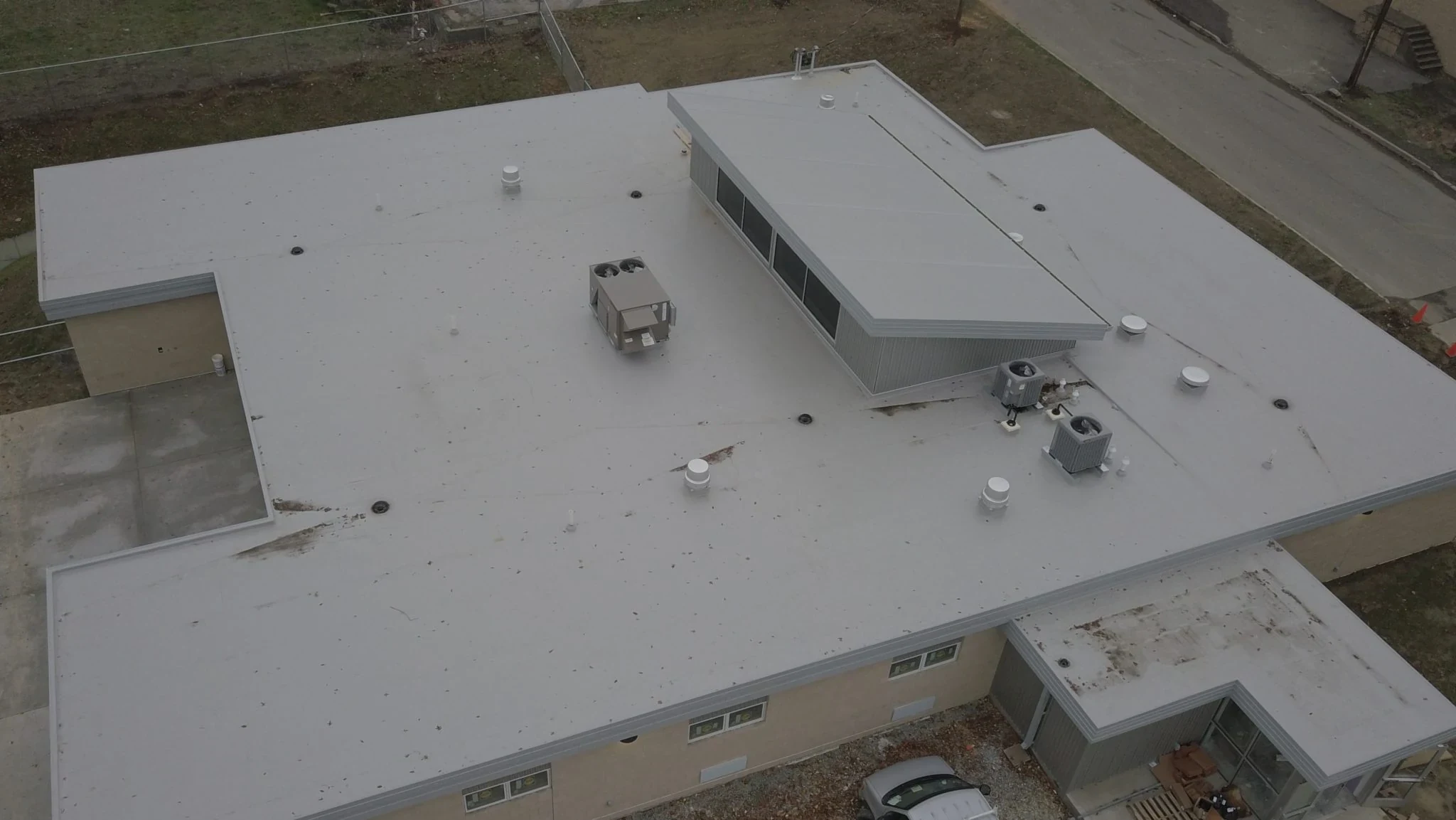
Sixty-mil TPO is the base membrane thickness that shows up most often in our bid packages for the warehouse and light-industrial stock along Route 30 and the turnpike interchanges. This page covers the specification itself, where it belongs in a Lancaster County procurement, and where we recommend stepping up before an owner signs off on it.
What the 07 54 00 Spec Section Actually Requires
TPO falls under CSI MasterFormat section 07 54 00, thermoplastic membrane roofing, and the product data submittal has to show sheet thickness, scrim reinforcement, and thickness above the scrim, rather than a single mil number on the cover sheet alone. On a 60-mil sheet the useful figure is what's left over the polyester reinforcement once you subtract the scrim itself, typically in the low-to-mid twenties.
The membrane is heat-welded rather than glued at the seams, which is the detail reviewers should confirm in the submittal because it changes both the QA plan and the inspection checklist the owner's representative signs off on before closeout.
White TPO also carries a reflectance and emittance value that belongs in the submittal for any project referencing an energy code or a cool-roof credit, and we attach the manufacturer's third-party test data rather than a marketing sheet.
Where 60-Mil Belongs in This County's Building Stock
The turnpike-exit distribution buildings around Denver and the cold-storage additions near Mount Joy's industrial parks are typical 60-mil candidates: large, flat, low-traffic roof fields with a manageable equipment count and an ownership group planning a fifteen-to-twenty-year hold.
Warehouses off the Mountville Route 30 exit and the light-industrial parcels around Christiana's rail spur fit the same profile. The deck is clean, the roof sees mostly maintenance foot traffic, and the bid competes well against thicker alternates.
We do not recommend 60-mil where a roof carries dense rooftop mechanical, frequent service traffic, or a planned solar array. Those projects get quoted at the heavier gauge, and we put the cost difference in front of the owner so the decision isn't made blind.
Attachment Method and What Goes in the Submittal
Mechanically attached systems are the standard bid basis for open warehouse fields: fastener rows into steel or wood deck, membrane welded over each row. It's the fastest system to install and the easiest to price against a competing product substitution request.
Induction-welded attachment fastens plates to the deck and bonds the membrane from above, cutting the penetration count and improving uplift performance in the corner and perimeter zones, which matters on the more exposed turnpike-adjacent sites where wind data pushes the enhanced fastening zone wider.
Fully adhered systems come up on smaller roofs, odd geometries, or re-cover work over structural concrete. We size the fastening pattern to the wind uplift report, not a generic table, and that report goes in the closeout binder alongside the rest of the warranty paperwork.
Freeze-Thaw Detailing for a Full Lancaster County Winter
A membrane roof in this county has to survive repeated freeze-thaw cycles every winter, and that stress concentrates at drains, curb flashings, and any spot where standing water can freeze and expand against a termination bar or a pitch pocket.
We spec positive drainage wherever the deck allows it and flag any low spot that will pond during a spring thaw, because a 60-mil sheet under repeated ice load at a drain bowl is where warranty claims originate on this membrane more than anywhere else in the field.
Ice damming at parapets and mechanical curbs gets extra attention in the submittal review, since a 60-mil sheet has less reserve thickness than the heavier gauge if a crew has to chip ice away from a flashing detail during an emergency callback.
Items we require in the product data submittal and closeout binder before a 60-mil TPO roof is signed off:
- Manufacturer product data sheet with scrim reinforcement and thickness-over-scrim figures
- Wind uplift calculation matched to the specific building height and exposure category
- Fastening pattern drawing for field, perimeter, and corner zones
- Third-party reflectance and emittance test data for white membrane
- Seam probe and peel-test log for the completed roof
- Manufacturer warranty tier and inspection sign-off documentation
Procurement Questions on 60-Mil TPO
Does 60-mil TPO meet a typical energy code reflectance requirement?
White 60-mil TPO generally meets standard cool-roof reflectance and emittance thresholds, but we confirm the specific numbers against the manufacturer's current test data rather than an older data sheet, since formulations change between product runs.
What warranty term is realistic on a 60-mil bid?
Fifteen to twenty years is the typical system warranty range on 60-mil TPO with standard attachment. Longer terms usually require a cover board or a heavier membrane, which we note as a bid alternate.
Is 60-mil TPO an acceptable substitution for a spec written around a different membrane?
It depends on the basis of design. We submit a formal substitution request with side-by-side performance data when a GC or owner asks us to price TPO against a spec written for another system.
How does prevailing wage affect the cost of a 60-mil TPO project?
On public and many institutional projects in Pennsylvania, prevailing wage rates apply to the labor portion of the bid. We carry those rates directly in the estimate rather than adding them back in later, so the submitted bid reflects the actual project classification.
Can 60-mil TPO go over an existing roof without a full tear-off?
Sometimes, if the existing deck and insulation pass a moisture survey and the code path allows a recover. We include that survey in the pre-bid scope so the recover-versus-tear-off decision is made before pricing, not after.
Spray Foam for Irregular Rooflines on the Tourism Corridor
Explore this commercial roofing scope
80-Mil TPO for Food Processing and Manufacturing Plant Roofs
Explore this commercial roofing scope
Black EPDM for Occupied Senior Living Campuses
Explore this commercial roofing scope
White EPDM for Healthcare and Cold-Adjacent Buildings
Explore this commercial roofing scope