
Silicone Coatings for Aging Roofs Along the Hospitality and Ag-Dealer Corridors
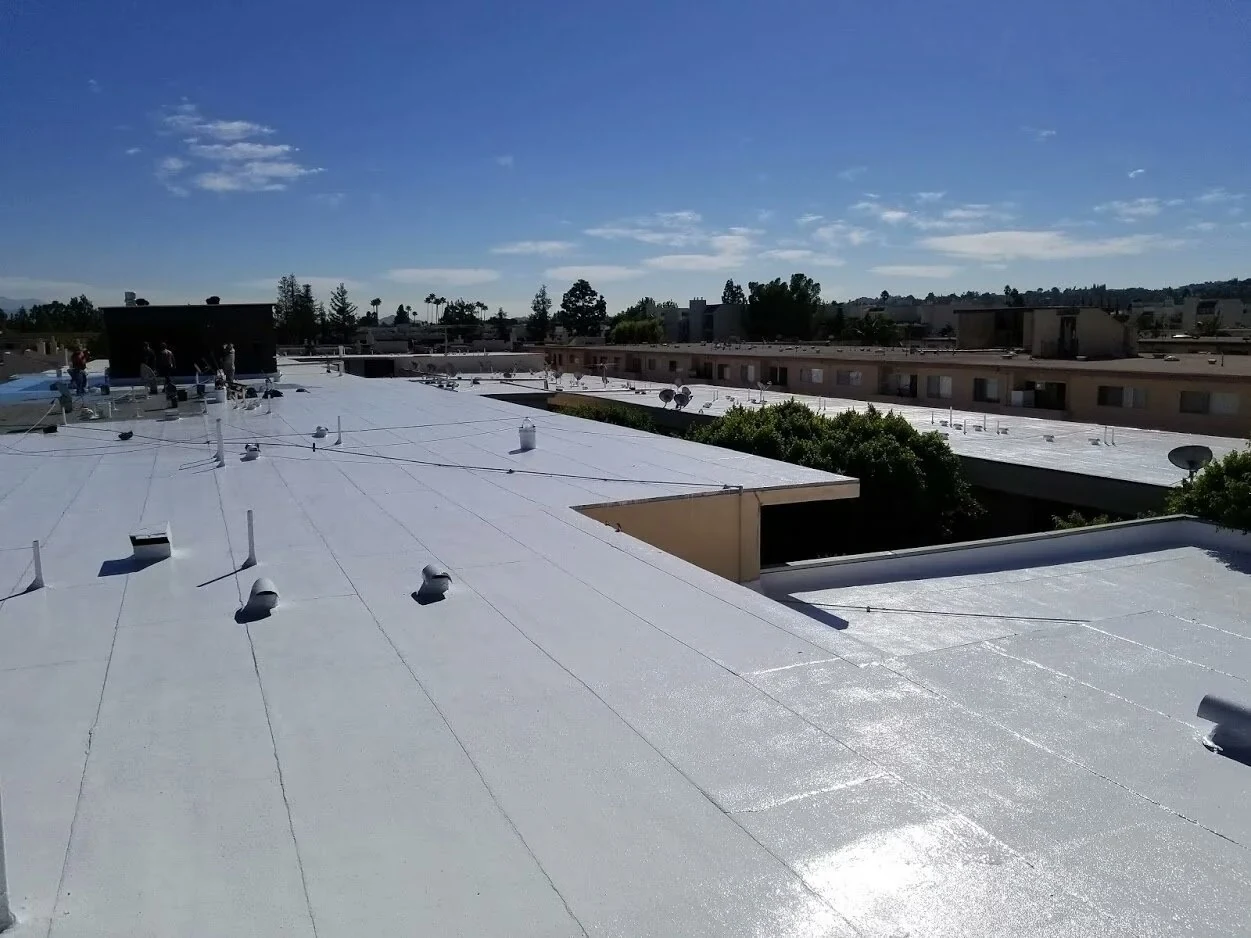
A restoration coating extends a roof's service life without the capital cost of a full tear-off, and it's a proposal we bring to owners more often now than we did a decade ago, particularly on the hotel corridor around the Route 30 outlets and on aging metal buildings among the ag-equipment dealers near Gap. This page covers when silicone earns its place in the capital plan and when it doesn't.
Where Coating Makes Sense on This Corridor's Hotel Stock
East Lampeter Township's hotel and outlet-retail corridor along Route 30 carries a mix of roof ages, and a hospitality operator managing a property through seasonal revenue swings often has more appetite for a restoration budget than a full capital replacement in a given year. A silicone coating over a sound, dry TPO or EPDM roof can add meaningful years of service life at a fraction of tear-off-and-replace cost, provided the underlying membrane and insulation pass a moisture survey first.
We don't coat a roof that's already wet underneath. Moisture trapped below a new coating doesn't dry out; it just gets sealed in, and a coating applied over a compromised roof turns a repairable problem into a much larger one a few years down the road. Every coating proposal starts with an infrared or core-cut moisture survey, not a visual walk alone.
Metal Building Coatings for Ag-Equipment Dealers
The ag-equipment dealer and service buildings along Route 30 and Route 41 near Gap frequently run older standing-seam or through-fastened metal roofs that have started to leak at fastener penetrations or seam laps but still have sound structural steel underneath. Silicone coating systems designed specifically for metal substrates can seal those fastener and seam leak points across the whole roof field at a lower cost than a full metal roof replacement.
We fastener-check and reseat any loose or backed-out screws before coating, since a coating applied over a failing fastener doesn't stop the fastener from continuing to work loose underneath the new membrane. That prep work takes longer than the coating application itself on an older metal roof, and we price it as its own line item rather than folding it invisibly into the coating cost.
Ponding Water Resistance in a Freeze-Thaw Climate
Silicone's genuine advantage over acrylic coatings is ponding water tolerance. Acrylic coatings can soften or degrade under standing water, which is a real problem on this county's low-slope roofs during a slow winter thaw when meltwater sits for days before draining. Silicone holds up to that ponding exposure far better, which is why we default to it over acrylic on any roof with known drainage limitations rather than treating the two coating chemistries as interchangeable.
That said, silicone is not a substitute for fixing an actual drainage problem. Where tapered insulation or additional drains are a realistic option within the coating budget, we price that work alongside the coating rather than coating over a low spot and calling the drainage issue solved.
What we check before recommending a silicone coating over tear-off:
- Moisture survey results across the full roof field, not spot checks alone
- Existing membrane or metal panel condition at seams, laps, and fastener points
- Ponding water locations and whether drainage correction fits the coating budget
- Remaining structural life of the deck and any framing supporting the roof
- Manufacturer coating thickness and mil-build requirements for the substrate type
What a Coating Warranty Actually Covers
Coating manufacturer warranties are typically shorter than a new membrane warranty and often more narrowly scoped, covering the coating film itself rather than the full roof system underneath it. We review those terms with the owner in plain language before they commit, since a coating warranty misunderstood as equivalent to a full system warranty is a common source of disappointment years later when a pre-existing structural issue surfaces that the coating was never meant to address.
Capital Planning Versus Operating Budget
Coating work often gets funded differently than a full reroof inside an owner's accounting structure, sometimes falling under a maintenance or operating budget rather than a capital expenditure line. That distinction can matter to a hospitality operator or a small business owner along the ag-dealer corridor who has more flexibility to approve an operating expense mid-year than a capital project that has to wait for the next budget cycle. We ask early in the proposal conversation which budget category the work needs to fit, since it can change the timeline as much as the technical scope does.
We also document coating work with before-and-after moisture survey data and photos, which gives an owner a record to reference the next time a capital planning conversation comes up, whether that's in three years or in fifteen.
Common Questions on Silicone Roof Coatings
How long does a silicone coating last?
Ten to twenty years depending on coating thickness, substrate condition, and maintenance, though it's typically applied as a restoration strategy rather than a permanent replacement for the underlying roof system.
Can you coat a roof that already has a few small leaks?
Sometimes, if the leaks are isolated and repairable and the moisture survey shows the rest of the roof is dry. Widespread wet insulation usually rules out coating in favor of tear-off.
Is silicone better than acrylic for this climate?
For roofs with any ponding water exposure, yes. Silicone tolerates standing water significantly better than acrylic, which matters given how often low-slope roofs in this county hold water during a winter thaw.
Does coating a metal roof stop all leaks?
It seals the coated surface, but any loose or failing fasteners need to be repaired first. A coating over unrepaired fasteners will eventually show the same leak points again.
How much less does coating cost compared to full replacement?
It varies by roof condition and size, but coating is generally a fraction of full tear-off-and-replace cost, which is why it's worth evaluating on any roof that passes the moisture survey.
SBS Modified Bitumen for Downtown Lancaster's Older Building Stock
Explore this commercial roofing scope
PVC for Wash-Bay, Auction Yard, and Ag-Processing Roofs
Explore this commercial roofing scope
Spray Foam for Irregular Rooflines on the Tourism Corridor
Explore this commercial roofing scope
60-Mil TPO for Lancaster County Distribution and Cold-Storage Roofs
Explore this commercial roofing scope