
PVC for Wash-Bay, Auction Yard, and Ag-Processing Roofs
PVC's resistance to oils, fuels, and cleaning chemicals is the reason it shows up in our submittals for buildings that see something other than plain rainwater on the roof surface or in the exhaust stream below it. This page covers where PVC earns its higher material cost in Lancaster County and what the chemical-exposure conversation looks like in the bid package.
Why Chemical Resistance Matters More Than Thickness Here
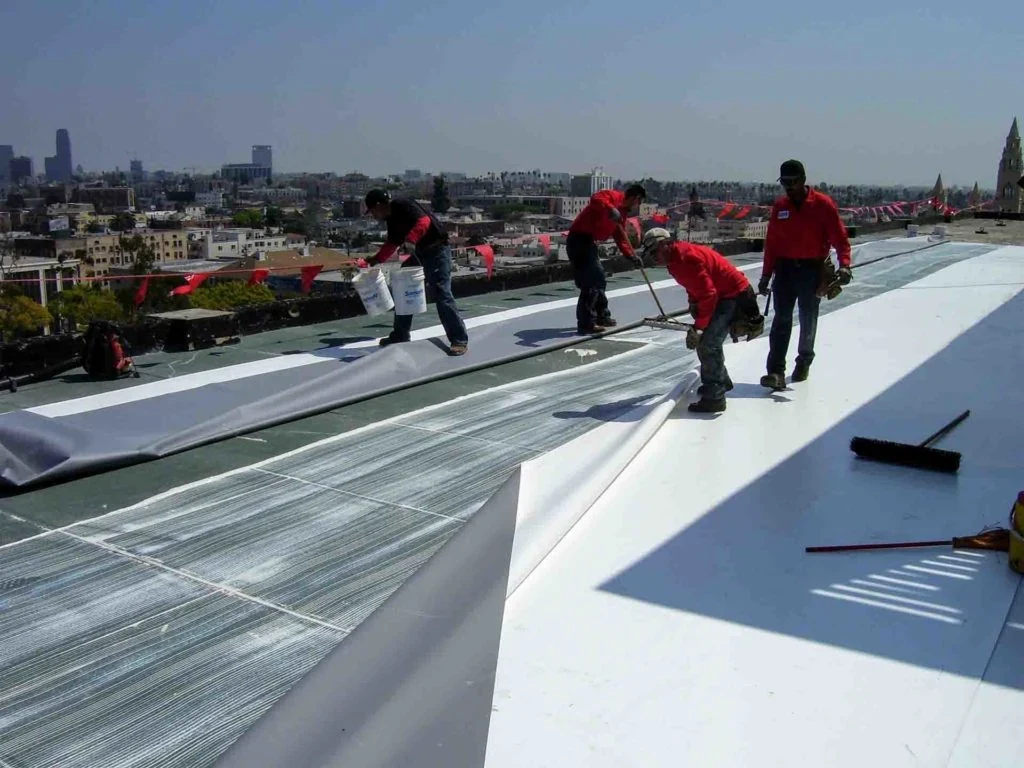
PVC membrane, another CSI 07 54 00 thermoplastic product alongside TPO, is formulated with plasticizers that give it flexibility, and its resistance to petroleum-based oils and many industrial chemicals is a structural difference from TPO's polyolefin chemistry, and a real one, not a marketing distinction. Where a building's roof or rooftop exhaust regularly contacts oil, grease, or solvent vapor, that chemical resistance matters more than membrane thickness alone.
Manheim Auto Auction's vehicle detailing and wash-bay operations are a clear example: exhaust from detailing chemicals, and in some building configurations rooftop discharge points tied to wash-bay ventilation, put a different kind of stress on a membrane than a typical office roof exhaust ever sees. We spec PVC on buildings with that exposure profile rather than defaulting to TPO because it's the more common bid.
Ag-Processing and Equipment Dealer Roofs Along Route 30/41
The ag-equipment dealers and service buildings clustered around the Route 30 and Route 41 junction near Gap run rooftop exhaust from parts-cleaning operations and vehicle service bays below, similar in principle to the wash-bay exposure at an auction facility. PVC's chemical resistance holds up better than standard TPO against that kind of exhaust over a twenty-year service life, and we walk owners through the cost premium against the reduced risk of early membrane degradation before they choose between the two systems.
Terre Hill's concrete products manufacturing runs a related but distinct exposure profile: dust and aggregate particulate rather than chemical vapor. PVC doesn't offer a meaningful advantage over TPO in that specific situation, and we say so rather than upselling a more expensive membrane where it doesn't earn its cost.
Welding and Seam Chemistry Compared to TPO
PVC seams heat-weld similarly to TPO, using the same general hot-air welding process, though the plasticizer content in PVC changes how the seam ages compared to TPO's polyolefin sheet. Older PVC formulations sometimes lost plasticizer over time and became brittle at the seams; current manufacturer formulations have largely addressed that with improved plasticizer retention, and we confirm current product data rather than relying on PVC's reputation from decades-old installations.
Rock Lititz's production and fabrication campus, where rooftop rigging points and heavier equipment loads are more common than on a standard commercial building, is another candidate where PVC's puncture and chemical resistance can be worth the premium, particularly on sections of roof carrying frequent rigging or fabrication-related rooftop access.
Chemical and Exposure Items We Document in the Submittal
- Rooftop exhaust source and chemical composition, where known from the facility's operations
- Wash-bay or detailing chemical discharge points and any rooftop drainage tie-in
- Current manufacturer plasticizer-retention data for the specified PVC product
- Comparative cost and service-life data between PVC and TPO for the specific exposure
- Rigging or heavy point-load locations requiring reinforced membrane or plates
When We Recommend TPO Instead of PVC
PVC's cost premium over TPO is real, typically running higher per square foot for comparable thickness, and we don't recommend it on buildings without a documented chemical or fuel exposure that justifies the difference. A standard warehouse, office building, or retail strip along the Route 30 outlet corridor in East Lampeter Township gets a TPO recommendation from us by default, with PVC quoted as an alternate only if the owner specifically asks or a known exposure exists that we haven't already identified.
Documenting Exposure in the Bid Package
A chemical-resistance recommendation carries more weight with an owner or GC when it's tied to a documented condition rather than a general statement about what PVC can handle. We photograph rooftop discharge points, note any visible staining or membrane degradation on the existing roof, and where possible get a description of the specific cleaning or process chemicals used inside the building before writing the recommendation into the proposal.
That documentation also matters for the manufacturer's warranty review. Several PVC manufacturers ask for a description of expected chemical exposure before issuing an extended warranty term on a roof with known industrial contact, and having that record ready at submittal saves a round-trip during the approval process.
Common Questions on PVC Roofing
Is PVC more expensive than TPO?
Generally yes, per square foot at comparable thickness. We recommend it specifically where chemical or fuel exposure justifies the added cost rather than as a default membrane choice.
Does PVC handle Lancaster County winters differently than TPO?
Both membranes perform comparably in cold weather when properly formulated and installed. Freeze-thaw drainage planning matters equally for both systems.
What exposure actually justifies specifying PVC?
Documented rooftop contact with petroleum oils, fuels, solvents, or chemical-laden exhaust. Dust or aggregate particulate exposure alone doesn't typically justify the cost premium.
Can PVC and TPO seams be welded together during a tie-in?
No, the two membrane chemistries generally aren't compatible for direct welding. A tie-in between the two systems requires a manufacturer-approved transition detail rather than a direct weld.
Do older PVC roofs in this area have known brittleness problems?
Some older-generation PVC lost plasticizer and became brittle over time. Current formulations have improved retention, and we verify current product data rather than assuming legacy performance applies.
Silicone Coatings for Aging Roofs Along the Hospitality and Ag-Dealer Corridors
Explore this commercial roofing scope
Spray Foam for Irregular Rooflines on the Tourism Corridor
Explore this commercial roofing scope
60-Mil TPO for Lancaster County Distribution and Cold-Storage Roofs
Explore this commercial roofing scope
80-Mil TPO for Food Processing and Manufacturing Plant Roofs
Explore this commercial roofing scope