
R-Panel Metal for the Turnpike-Exit Warehouse and Auto Auction Corridor
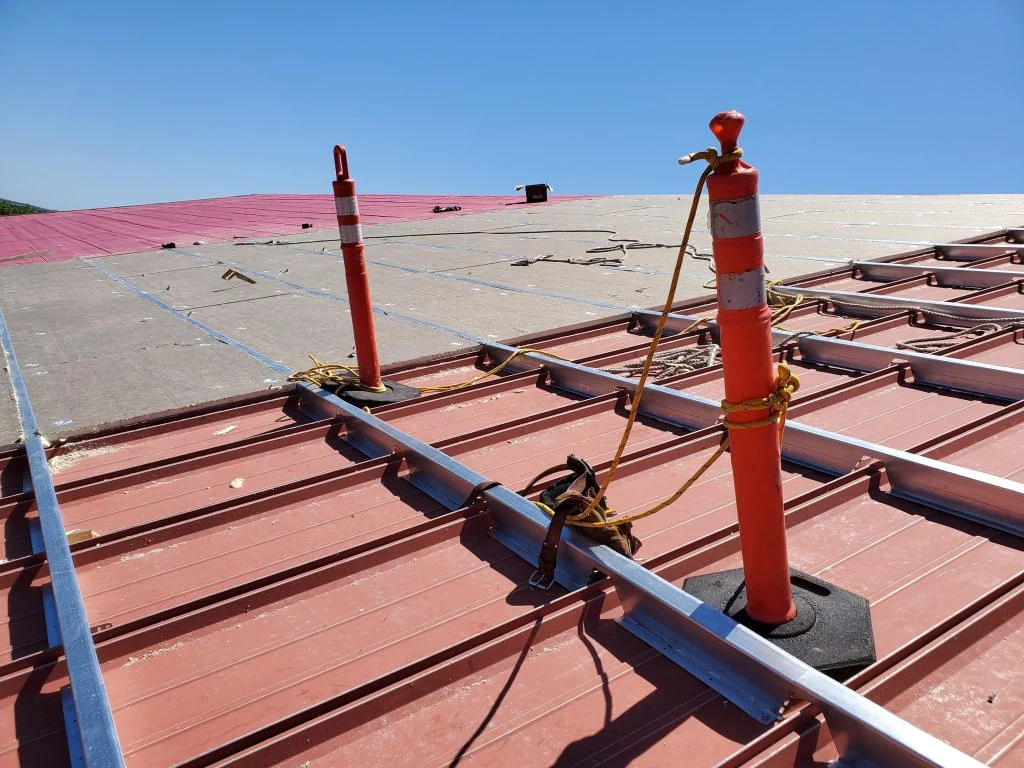
R-panel is the economical metal roofing choice for the large pre-engineered buildings clustered around the Denver turnpike interchange, the Manheim Auto Auction complex, and the light-industrial strips along Route 272. This page covers where R-panel fits, where it doesn't, and how we price it against the standing seam alternative.
Manheim's Auto Auction Complex Runs Miles of R-Panel Roof
The Manheim Auto Auction property, one of the largest vehicle auction operations in the country, includes a large footprint of prep buildings, service bays, and covered inspection lanes, much of it roofed in exposed-fastener R-panel because of its lower material and labor cost across large simple spans. R-panel trades standing seam's concealed-fastener durability for a lower up-front price, which makes sense on utility and service buildings where roof appearance matters less than square-footage cost. We size fastener spacing and panel gauge against the specific building's wind exposure, since a large open-span structure sees uplift forces a smaller building doesn't.
Denver's turnpike-exit distribution and cold storage buildings run a similar calculation. New construction in this corridor increasingly specifies standing seam or membrane on the primary roof, but R-panel still shows up on secondary structures, canopies, and lower-cost warehouse additions where the owner is optimizing for construction budget over fifty-year service life.
Reamstown and Brownstown: Route 272's Working Buildings
Reamstown's businesses near the turnpike exit and Brownstown's commercial strip along Route 272 both carry a mix of smaller pre-engineered metal buildings where R-panel is the standard roof and wall system. These buildings are typically simpler in geometry than a production campus or hospital wing, which keeps installation straightforward, but exposed fasteners mean maintenance has a different rhythm than a standing seam roof - fastener backout and washer degradation are the most common failure points we find on older R-panel roofs in this territory.
We inspect fastener condition on every R-panel maintenance visit specifically because it's the detail owners overlook. A roof that looks fine from the ground can have dozens of backed-out or degraded fasteners at the ridge and eave where wind uplift concentrates.
What Goes Into an R-Panel Bid
- Panel gauge and rib profile matched to span and wind exposure
- Fastener type, spacing, and washer specification
- Underlayment and condensation control for the specific building use
- Trim and closure detail at ridge, eave, and rake
- Manufacturer finish warranty terms
- Re-fastening or overlay scope on existing R-panel roofs needing repair
We break out fastener specification as its own line item because it's the single most common source of R-panel callbacks, and an owner comparing bids should be able to see exactly what fastener system and spacing each contractor is proposing.
R-Panel Versus Standing Seam: An Honest Comparison
R-panel costs less up front and installs faster than standing seam, which is why it remains the default on utility buildings, prep facilities, and secondary structures across this territory. Standing seam's concealed fastener system avoids the maintenance cycle that exposed fasteners require, and it typically outlasts R-panel by a decade or more. On a building where appearance and long-term maintenance cost matter - an office building, a visible retail structure, a production facility - we usually recommend standing seam. On a service building, prep facility, or budget-constrained warehouse addition, R-panel is often the more sensible choice, and we say so directly rather than upselling a system the project doesn't need.
Snow and Wind Loads on Large Open Spans
Many of the buildings in this corridor use wide clear-span construction, which concentrates snow and wind load differently than a smaller structure with interior support columns. We check panel gauge and fastener spacing against the specific span and roof pitch rather than applying a standard spec across every building, since the same R-panel system that performs well on a narrow structure can be undersized on a 100-foot clear span.
Turnpike-corridor buildings also see more wind exposure than structures tucked into a valley or surrounded by other buildings, and eave and ridge details need to account for that exposure specifically. We've seen R-panel roofs elsewhere in the county fail first at the ridge cap and rake trim rather than in the field of the panel, which is a fastening and closure detail problem more than a panel material problem.
Maintenance Programs for Auction and Distribution Properties
Properties like the auction complex and the surrounding distribution buildings run enough total roof area that a scheduled maintenance program makes more sense than reactive repair calls. We set up periodic fastener and seam inspections on a defined interval, catching backed-out screws and worn washers before they become active leaks. For a property with dozens of buildings under one ownership group, that kind of program also generates a maintenance record that's useful for capital planning and insurance conversations alike.
Questions on R-Panel Roofing Projects
How long does an R-panel roof typically last?
Generally 20 to 30 years with proper fastener maintenance, shorter if fastener backout and washer degradation aren't addressed on a regular inspection schedule.
Can you re-fasten an existing R-panel roof instead of replacing it?
Often, yes, if the panels themselves are in good condition and the failure is limited to fasteners and washers. We inspect the full roof before recommending re-fastening over a recover or replacement.
Why would you choose R-panel over standing seam on a new building?
Lower up-front material and labor cost, mainly. It makes sense on utility buildings, prep facilities, and structures where appearance and maximum service life matter less than construction budget.
Does R-panel perform well on large open-span buildings?
Yes, when panel gauge and fastener spacing are sized correctly for the span and wind exposure. Undersized specifications on wide spans are a common source of problems we find on older buildings.
What maintenance does an R-panel roof need that standing seam doesn't?
Regular fastener inspection. Exposed fasteners loosen and washers degrade over time in a way that concealed-fastener standing seam systems don't experience.
EPDM on Lancaster County's Older Manufacturing Stock
Explore this commercial roofing scope
Documenting Roof Damage in a Format an Adjuster Can Actually Use
Explore this commercial roofing scope
Modified Bitumen on Downtown Lancaster's Older Roof Stock
Explore this commercial roofing scope
Maintenance Visits Timed to Occupied Senior-Living Campuses and Food-Plant Schedules
Explore this commercial roofing scope