
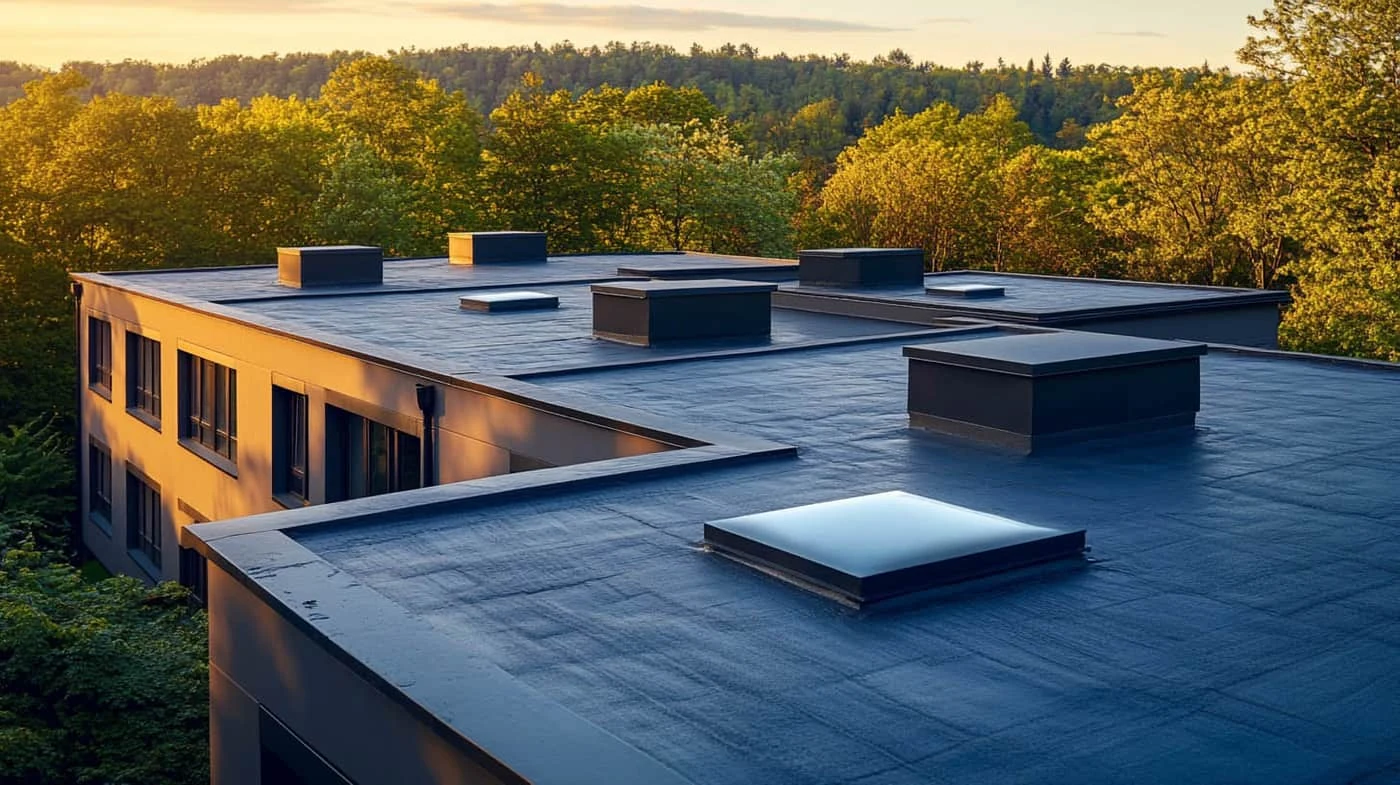
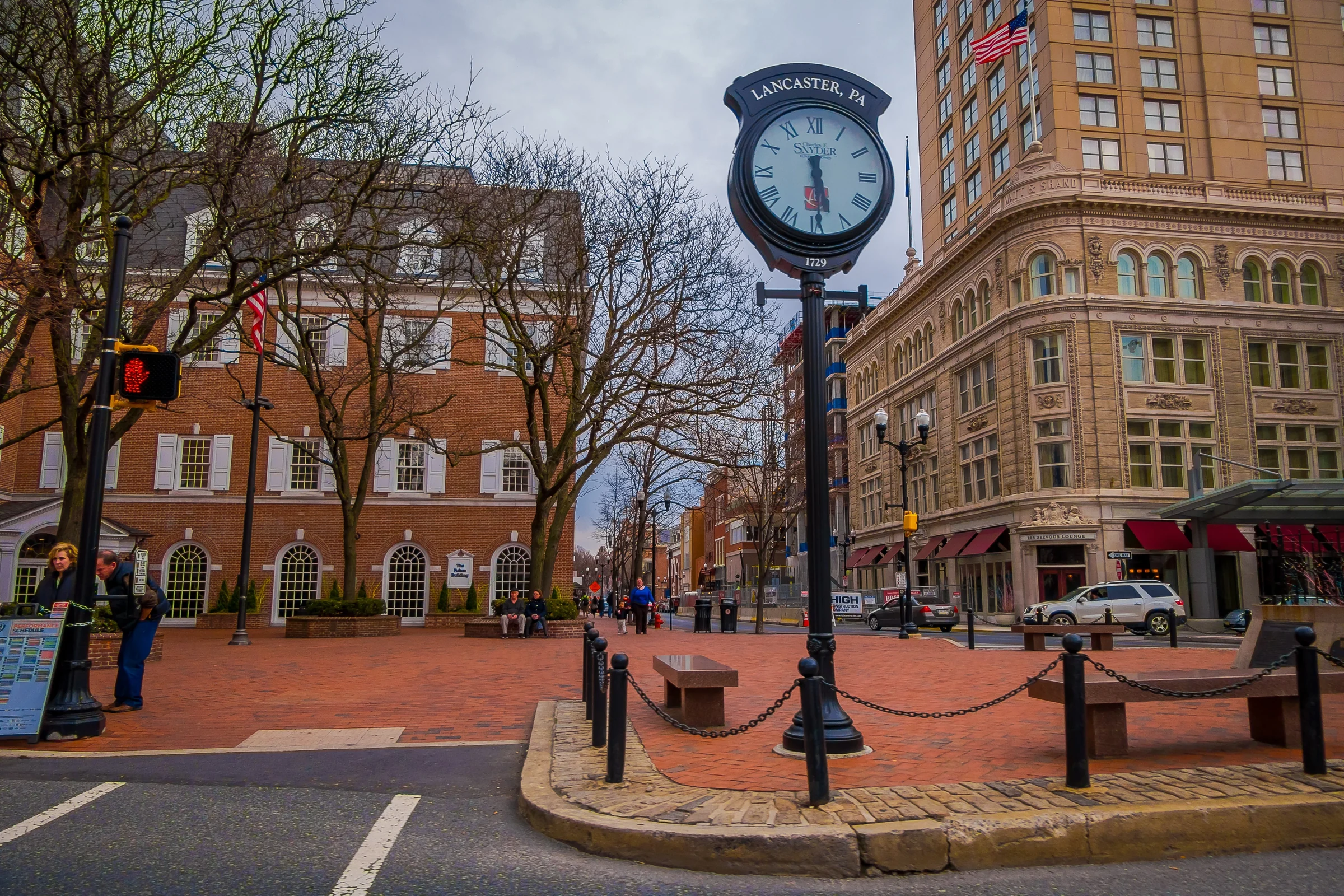
Modified Bitumen on Downtown Lancaster's Older Roof Stock
A lot of the low-slope roofs on older buildings around Downtown Lancaster, Marietta, and Columbia are still running modified bitumen, and a lot of them are strong candidates to stay that way. This page covers when we recommend a modified bitumen recover or replacement, and how we price a system on buildings where roof access and building age both complicate the job.
Downtown Lancaster's Mixed-Use Buildings Run a Patchwork of Roof Ages
The blocks around Central Market, the hotel corridor, and the convention center carry a mix of building ages and roof additions, and it's common to find two or three generations of modified bitumen layered on the same building where additions were tied into the original roof over the years. Before we quote anything downtown, we walk the full roof and map where those transitions are, because a leak near an old tie-in point often traces back to a flashing detail from a renovation, not a failure in the current membrane field.
Access is its own variable downtown. Older buildings built to the lot line don't always have a straightforward path for material delivery or debris removal, and hotel and retail tenants on the ground floor need protection from dust and noise during business hours. We plan staging and work windows around what the block actually allows, not a standard suburban laydown plan.
Marietta and Columbia: River Town Storefronts With Real Roof Age
Marietta's storefronts and Columbia's riverfront commercial buildings share a similar profile - older masonry construction with modified bitumen roofs added or replaced at some point after the original build. Torch-applied and self-adhered modified bitumen both show up in this territory depending on when the work was done and what the building's fire code allowed at the time. We identify which application method is already on the roof before proposing a recover, since mixing application types on the same field without proper detailing creates its own failure risk.
East Petersburg's borough businesses, tucked in among Manheim Township's newer growth, run a similar mix of older commercial roofs that have aged past their original warranty without necessarily needing full replacement. A granulated cap sheet in reasonable condition with sound insulation underneath is often a strong recover candidate rather than a tear-off.
What We Check Before Recommending Modified Bitumen Again
- Number of existing roof layers and total assembly weight on the deck
- Application method already in place - torch, self-adhered, or hot mop
- Blistering, alligatoring, or granule loss on the cap sheet
- Flashing condition at every parapet, tie-in, and rooftop penetration
- Insulation moisture content by core cut where warranted
- Fire code and application method restrictions for the specific building
Buildings with multiple existing layers usually need a full tear-off before a new roof goes on, since deck weight limits don't allow indefinite layering. Buildings with a single sound layer and dry insulation are often better candidates for a cap sheet recover.
Why Modified Bitumen Still Makes Sense on Certain Buildings
Modified bitumen's multi-ply redundancy is its main advantage over a single-ply membrane - a small puncture or seam gap doesn't automatically create a leak path the way it can on a single-layer system. On older downtown buildings with irregular roof shapes, parapets, and a lot of flashing detail, that redundancy is worth the added labor cost of a multi-ply installation. We don't default to modified bitumen out of habit; we recommend it specifically on roofs where the building geometry and access constraints favor it.
Winter Freeze-Thaw on Older Downtown Roofs
Older downtown buildings often have less roof slope than current code would require on new construction, which means ponding water is a bigger factor here than on a newer suburban building. Repeated winter freeze-thaw cycling at those low spots is the most common cause of the blistering and cracking we find on modified bitumen roofs approaching the end of their service life. We flag drainage improvements as part of any recover scope where ponding is a factor, since a new membrane over the same drainage problem just delays the next failure.
Parapet walls on older masonry buildings add a second freeze-thaw exposure most owners don't think about until it shows up as an interior leak two floors below the roofline. Water working behind old counterflashing or into cracked coping stone can travel down inside the wall cavity before it ever reaches a roof membrane, which is why we inspect parapet condition as part of every downtown modified bitumen quote rather than limiting the survey to the flat field.
Bid Documentation for Multi-Tenant and Managed Buildings
Downtown buildings under third-party property management usually go through a formal bid comparison before a roofing contract gets signed, even on smaller jobs. We build our proposals to hold up in that process: itemized scope by roof section, application method and material specification, flashing detail at every transition, and a written timeline that accounts for tenant coordination. A property manager reviewing three bids side by side should be able to see exactly what differs between them without calling each contractor for clarification.
Questions About Modified Bitumen Projects Downtown
Can you work around active hotel or retail tenants during the job?
Yes. We schedule noisy work and material staging around business hours and coordinate directly with property management or tenant contacts before work starts.
How many roof layers is too many for a recover?
It depends on the deck's structural capacity, but most codes and manufacturer specifications cap it at two layers. Beyond that, a full tear-off is usually required regardless of the current membrane's condition.
Is torch-applied modified bitumen still allowed downtown?
It depends on the specific building and local fire code requirements. We confirm application method restrictions before proposing torch-applied systems, particularly on occupied multi-tenant buildings.
What's the typical service life of a modified bitumen roof here?
Generally 15 to 20 years with proper maintenance, though ponding water and delayed flashing repairs can shorten that significantly.
Do you recommend switching to single-ply on older downtown buildings?
Sometimes, particularly on simpler roof shapes with good access. On complex older roofs with a lot of parapet and flashing detail, modified bitumen's redundancy often remains the better fit.
TPO Specs for the Turnpike-Exit Warehouse Corridor
Explore this commercial roofing scope
Acrylic Coatings for the Amish-Country Tourism Strip
Explore this commercial roofing scope
Built-Up Roofing on Institutional Campuses That Can't Go Off-Line
Explore this commercial roofing scope
Reroofing Plants, Warehouses, and Institutional Buildings Across Lancaster County
Explore this commercial roofing scope