
Standing Seam Metal for Lititz's Production Campuses and Ag Buildings
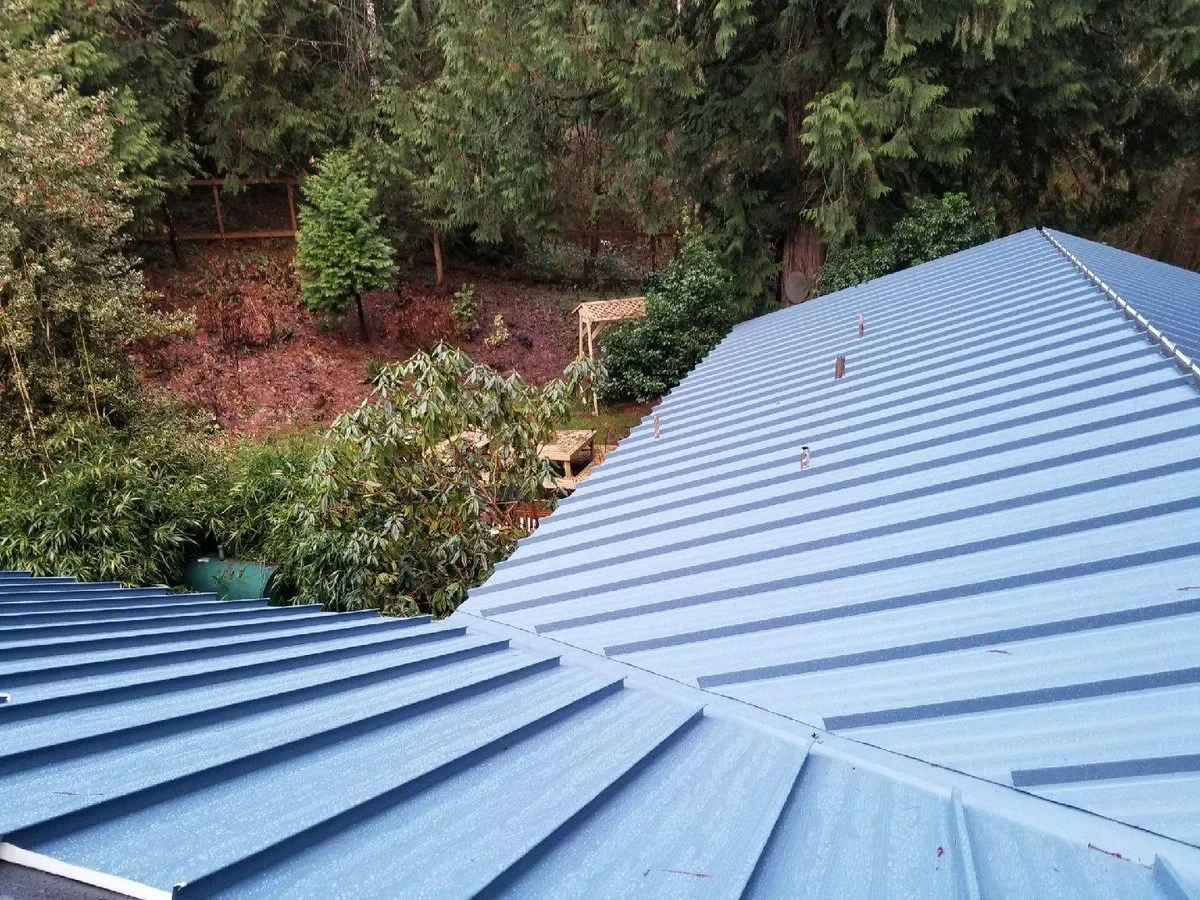
Standing seam metal shows up on a wider range of buildings in this territory than most people expect - production facilities in Lititz, ag equipment buildings around Gap, and manufacturing plants that need a durable, low-maintenance roof over decades rather than years. This page covers panel selection, snow performance, and how we scope a metal roof bid.
Lititz's Production and Manufacturing Campuses Set a High Bar
The Rock Lititz production campus and the manufacturing operations clustered around it, including Wilbur Chocolate's facilities, represent some of the most demanding roof specifications in the county. Touring production and entertainment infrastructure needs a roof that performs without surprises - no leaks during a load-in, no maintenance windows that conflict with a production schedule. Standing seam metal's long service life and minimal maintenance profile fit that requirement better than most membrane systems, and we spec panel gauge and finish accordingly rather than defaulting to a standard commercial profile.
Manufacturing buildings in this same corridor often combine standing seam metal roofing with membrane sections over office or lower-slope additions, and getting the transition detail right between the two systems is where a lot of leaks originate on mixed-roof buildings. We treat that transition as its own line item in every proposal, not an afterthought handled in the field.
Gap's Ag Equipment Dealers Need Function Over Finish
Gap sits at the Route 30 and 41 junction, and the ag equipment dealers and service buildings clustered there run large-span metal buildings where standing seam performs well against snow load and wind uplift without the maintenance burden of a membrane roof. These buildings often have simpler geometry than a production campus, which keeps installation more straightforward, but wide clear spans mean panel length and expansion joint placement matter more than on a smaller building.
New Holland's CNH Industrial agriculture plant and the broader ag-manufacturing base around it represent the industrial end of standing seam metal in this territory - large roof areas, significant rooftop equipment for manufacturing processes, and a building type where metal's durability against decades of thermal cycling makes it the practical long-term choice over membrane alternatives.
Panel Selection and What Goes in the Bid
- Panel gauge, width, and seam type - mechanically seamed or snap-lock
- Finish system and manufacturer warranty against fade and chalking
- Underlayment specification for condensation and ice protection
- Snow retention system design where roof pitch and occupancy require it
- Expansion joint placement for long panel runs
- Flashing detail at every transition, valley, and penetration
We include all of that in the submittal package before a contract is signed, along with the manufacturer's finish warranty terms, which typically run separately from the weathertightness warranty and cover different failure modes.
Snow and Ice Behavior on a Metal Roof
Lancaster County's winters bring enough snow accumulation that snow retention design matters on any standing seam roof with an entrance, walkway, or parking area below the eave line. Metal sheds snow differently than a membrane roof - it can release in a sudden slide rather than melting gradually - and we design retention systems specifically for that behavior wherever the roof overhangs an occupied or high-traffic area. Ice damming is less of a concern on a well-ventilated metal roof than on some other systems, but valley and gutter design still need attention where multiple roof planes intersect.
Why Standing Seam Costs More Up Front and Less Over Time
Standing seam metal carries a higher initial material and labor cost than most membrane systems, and we don't pretend otherwise in a proposal. The case for it is service life - a properly installed standing seam roof commonly runs 40 years or more with minimal maintenance, compared to 15 to 30 years for most membrane systems before a recover or replacement is needed. On production, manufacturing, or ag-equipment buildings where roof downtime is expensive, that extended service life is usually the deciding factor over the lower sticker price of a membrane alternative.
We build that lifecycle comparison into every metal roof proposal for an owner who's weighing the numbers against a cheaper membrane bid. Material and labor cost per square foot only tell part of the story - projected maintenance cost, expected recover or replacement year for the membrane alternative, and the cost of roof downtime on a production or manufacturing schedule all belong in the same comparison. A facilities committee reviewing capital options usually wants that full picture rather than the up-front number alone.
Coordinating Metal Roof Installation Around an Active Facility
Crane picks and panel staging take more planning on a standing seam job than on most membrane installations, particularly on production campuses where load-in schedules and touring equipment traffic can't be interrupted. We sequence panel delivery and installation around what the facility tells us is off-limits during specific windows, and we coordinate crane placement with site access constraints before committing to a start date. On ag-equipment dealer buildings with active service bays below, the same logic applies to keeping customer and service traffic clear of the work zone throughout the installation.
Questions on Standing Seam Metal Projects
What panel gauge do you recommend for large-span ag buildings?
It depends on span length and expected snow load, but 24-gauge is common for buildings in this territory. Wider spans or heavier expected snow load may call for a heavier gauge.
Does a production facility need special roof detailing?
Yes, particularly around rooftop mechanical equipment supporting production or entertainment infrastructure. We treat those penetrations individually rather than applying a standard warehouse detail.
How does snow retention work on a standing seam roof?
Retention systems attach to the seams without penetrating the panel and are positioned based on roof pitch, panel length, and where snow could slide onto an occupied area below.
Can you tie a metal roof section into an existing membrane roof?
Yes, and it's common on mixed-use buildings. The transition detail between the two systems is the most important part of that scope and gets specific attention in every proposal.
What warranty comes with a standing seam metal installation?
Finish warranties and weathertightness warranties are typically separate and cover different failure modes. We review both with the owner as part of the submittal package before work starts.
TPO Specs for the Turnpike-Exit Warehouse Corridor
Explore this commercial roofing scope
Acrylic Coatings for the Amish-Country Tourism Strip
Explore this commercial roofing scope
Built-Up Roofing on Institutional Campuses That Can't Go Off-Line
Explore this commercial roofing scope
Reroofing Plants, Warehouses, and Institutional Buildings Across Lancaster County
Explore this commercial roofing scope